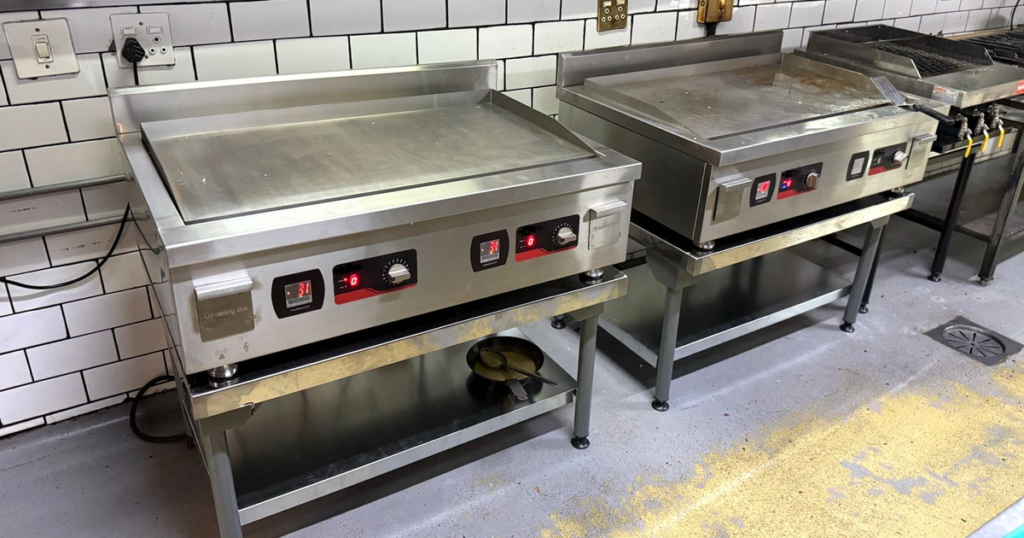
Restaurant chain owners can now access world best energy management technology affordably, I’ve seen firsthand how new innovative equipment can lead to big wins in efficiency, sustainability, and the bottom line. I’m constantly seeking ways to support Restaurant owners enhance food quality, streamline operations, and cut costs without sacrificing that crispy perfection our customers crave.
Recently, we rolled out induction deep fryers across six of locations in Durban, Cape Town and Johannesburg, replacing outdated gas and direct electric models. The results? Superior food consistency, lightning-fast recovery times, and massive energy savings that are transforming our bottom line. In this post, I’ll share the key benefits of induction technology over traditional fryers, backed by our real-world experience.
The Pitfalls of Gas and Direct Electric Fryers
Traditional gas fryers heat oil via a heat exchanger heated via a gas flame, leading to uneven temperatures and slow recovery after dropping in cold food – think soggy fries during peak hours and slow response times. Direct electric fryers, while better than gas deep fryer, still suffer from poor analogue temperature control due to single group heating elements that cycle on and off, causing a high dead bank and overshoot temperature fluctuations of the cooking oil that affect oil life and finished food quality. In our client’s chain, these issues meant more oil usage, inconsistent cooking of their famous fish and chip orders, and higher energy bills from inefficient heat transfer and control.
Why Induction Deep Fryers Are a Game-Changer
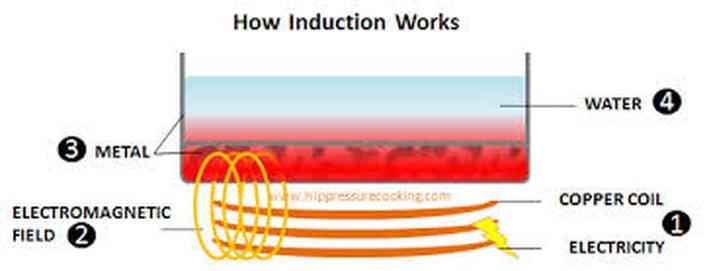
Induction fryers use electromagnetic fields to heat the oil directly through the vat, by heating the whole vat surface and offering precise control and rapid response. This means minimal temperature overshoot, more stable cooking oil temperatures and that delivers both cost savings, faster cooking cycling times and improved food quality. Here’s what sets them apart:
- Superior Food Quality: With pinpoint temperature accuracy (within 1-2°C), induction prevents overcooking or undercooking. The fries and fish come out crispier and less greasy, extending oil life by up to 50% and reducing waste. Customers notice – we’ve seen a 20% uptick in positive feedback on texture and taste post-upgrade.
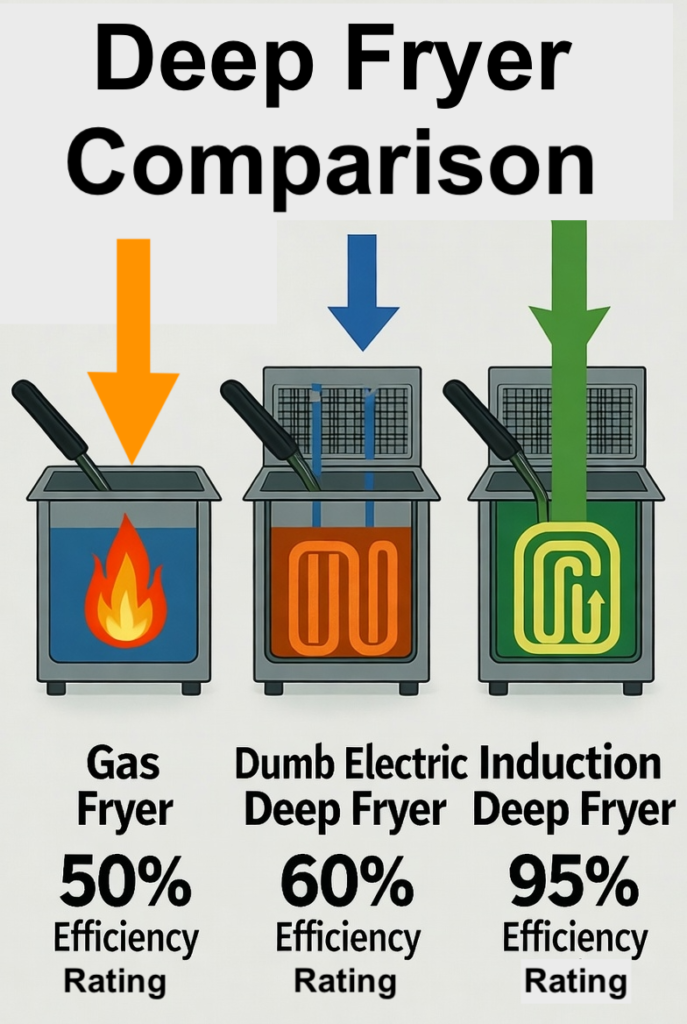
- Energy Savings: Induction is incredibly efficient, transferring nearly all energy to the oil without heating the surrounding air. Compared to gas fryers, we’ve achieved 75% energy savings; versus direct electric, it’s 40-50%. In the six-restaurant rollout, this translates to thousands in monthly savings, with quicker ROI amid rising utility costs.
- Fast Response and Safety: Recovery time after loading? Seconds, not minutes. No open flames mean safer kitchens, fast cooking cycle times, cooler work environments, and easier cleaning – no more soot or exhaust buildup.
To illustrate how induction works, here’s a diagram showing the electromagnetic heating process in a commercial deep fryer.
And for a visual on the efficiency edge, check out this comparison chart highlighting energy savings across fryer types.
Our 6-Restaurant Rollout: Real Results
We piloted the upgrade in high-traffic spots, installing induction units with smart controls for auto-shutoff during idle times. Training was minimal – staff love the intuitive interfaces, fast response and accuracy of the temperature controller. Energy audits show we’re on track for annual savings exceeding $60,000 chain-wide, with improved throughput during rushes. It’s not just about cost; it’s elevating our brand through better, more consistent food.
If you’re in fast food, consider induction for your next upgrade. It’s efficient, eco-friendly, and customer-approved. What’s your take on kitchen tech innovations? Share below!