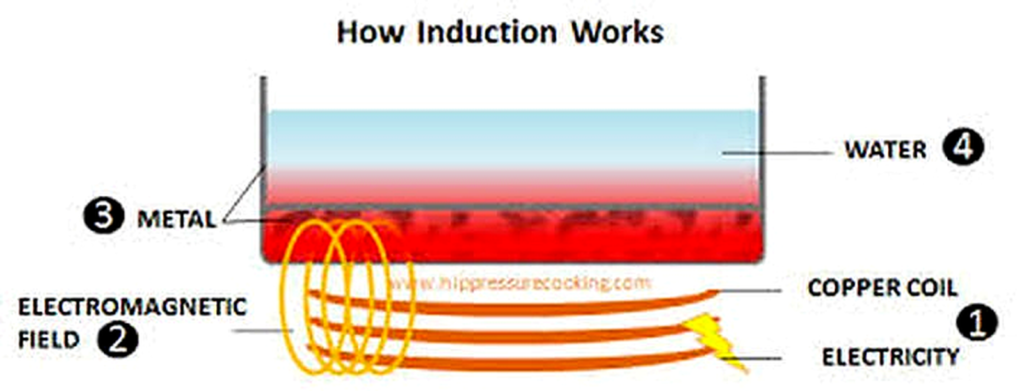
As part of a 20-restaurant casual dining rollout, we’ve been closely involved in evaluating and implementing kitchen technologies that enhance food quality, streamline operations, and reduce operating costs. One of the most impactful upgrades has been the shift to induction flat plates (also known as induction griddles or planchas), replacing ageing gas and direct electric units.
The results have been immediate and measurable. The move to induction has transformed day-to-day grilling performance, delivering consistent cooking quality, significant energy savings, and ultra-fast response times — all while creating safer, cooler kitchens. For operators still relying on gas or traditional electric flat plates, this rollout clearly shows why induction is becoming the new standard for high-volume flat plate cooking — and how it’s already delivering strong operational returns across multiple sites.
The Shortcomings of Gas and Direct Electric Flat Plates
Gas flat plates heat via open flames, resulting in hotspots, slow recovery, and poor temperature control that leads to uneven cooking – think charred burgers on one side and underdone on the other. Direct electric versions fare slightly better but still cycle heat inefficiently, causing fluctuations that degrade food quality and waste energy. In our busy kitchens, these issues meant longer cook times, more scrapped items, and higher utility bills from constant overworking.
The Induction Advantage: Quality, Efficiency, and Speed
Induction flat plates use electromagnetic technology to heat only the cookware or food directly, offering precision that’s a game-changer for casual dining staples like steaks, veggies, and pancakes. Here’s the breakdown:
- Enhanced Food Quality: With superior temperature control (within 1-2°C accuracy), induction ensures even searing and consistent results. No more hotspots – just perfectly caramelized flavors that keep customers coming back. We’ve noted a 20% drop in food waste from overcooking.
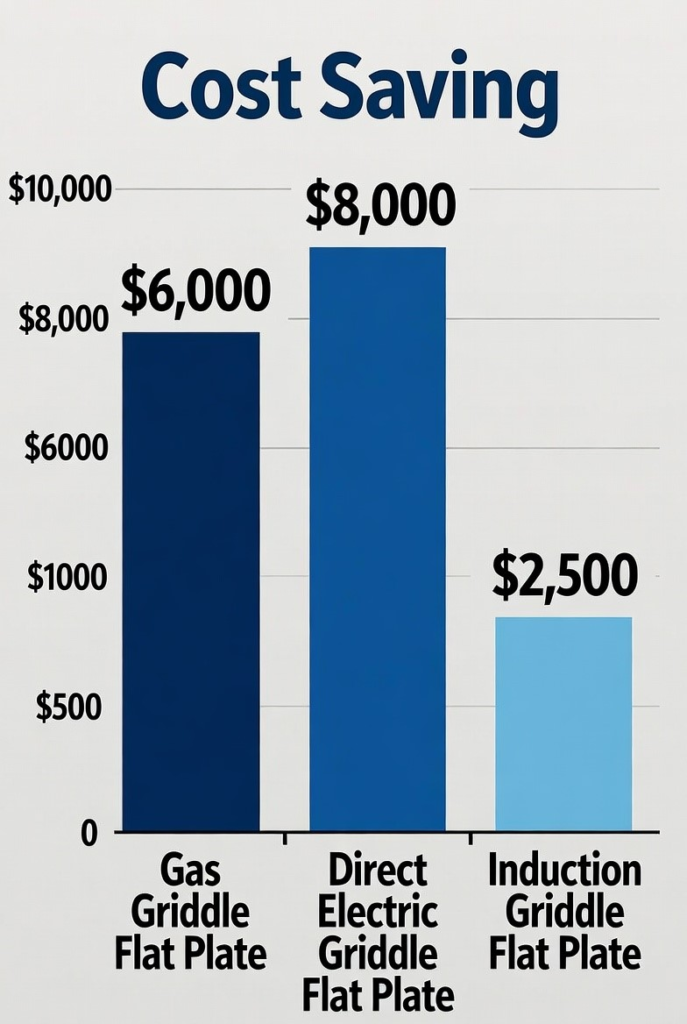
- Energy Savings: Induction transfers energy directly, slashing usage by 75% compared to gas flat plates and 60% versus direct electric ones. In our rollout, this has cut monthly energy costs significantly, with quicker ROI in high-volume spots.
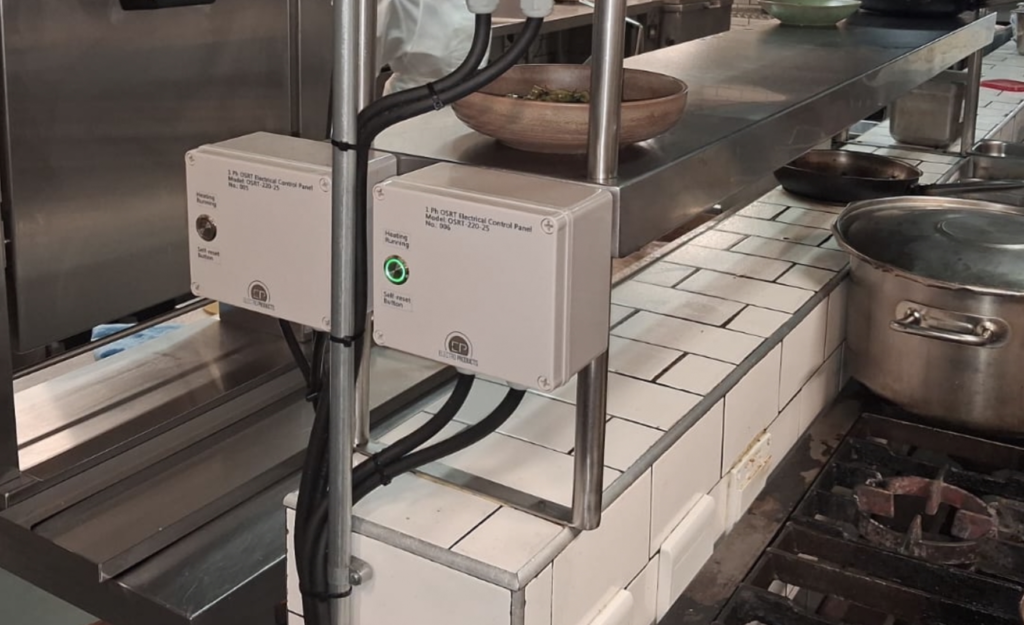
- Fast Response and Smart Features: Our 1000mm induction flat plates feature rapid reheating – recovering in seconds where others take minutes. We added one-shot timers to each of the two separately controlled halves, allowing independent temperature settings for multitasking (e.g., high heat for searing on one side, low for warming on the other). The true standout? Heating only activates where food is applied, minimizing waste and keeping kitchens cooler and safer.
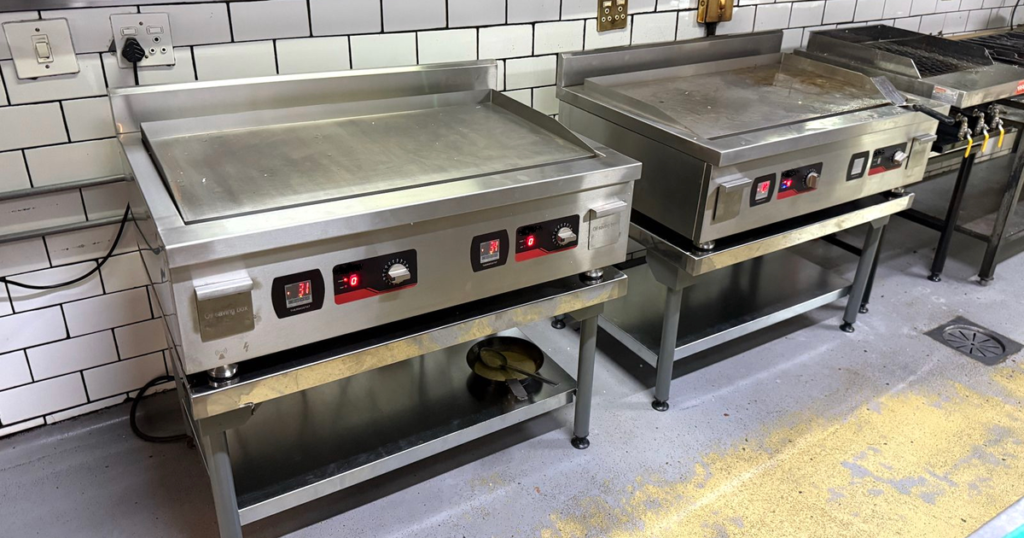
To show how induction works, here’s a picture of two (2) commercial induction flat tops griddle ready for action in La Parada Menlyn Maine.
To show how the one-shot timers work with the induction, here’s a picture of the one-shot timers controlled an induction flat top griddle.
And for the efficiency proof, check out this chart comparing energy savings across induction, gas, and electric kitchen appliances.
Our 20-Restaurant Rollout: Tangible Wins
We targeted high-traffic casual dining spots for the upgrade, integrating smart controls for auto-idle during the afternoon lulls. Staff training was seamless, and the dual-halves design has boosted throughput by 25% during peaks. Overall, we’re projecting annual savings in the six figures, plus happier teams in cooler, flame-free environments. It’s not just tech – it’s a commitment to quality and sustainability.
If your chain is still on gas or old electrics, consider induction flat plates. They’ve supercharged our operations. What’s your latest kitchen upgrade? Share in the comments!