80% energy savings on wet Bain Maries. Wet bain maries are massive energy wasters. Restaurant chain owners can now access world best energy management technology affordably, I’ve seen firsthand how small changes in equipment can lead to big wins in efficiency, sustainability, and the bottom line. One such innovation that’s transformed our food hot storage and display operations is the switch to dry bain maries. These systems not only cut down on energy waste but also reduce food spoilage and maintenance hassles compared to traditional wet models. In this post, I’ll dive into the technical details, share real efficiency gains, and explain why this upgrade pays for itself in just two years – all while keeping your sauces, gravies, and warm dishes at perfect serving temperatures.
The Drawbacks of Traditional Wet Bain Maries
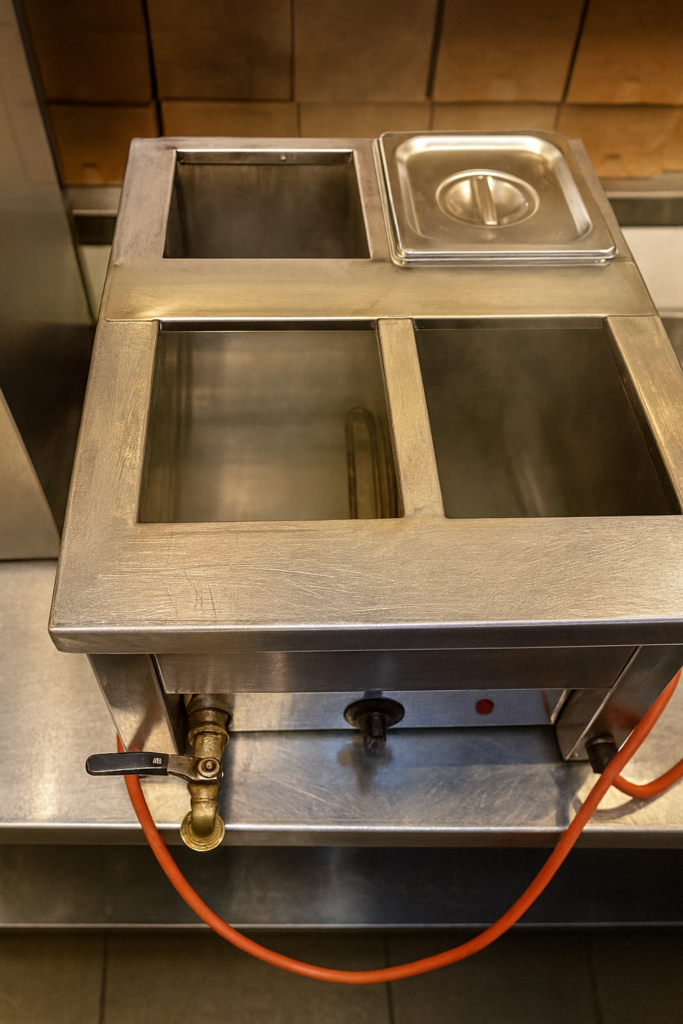
Wet bain maries rely on an electric heating element to warm a water bath, which then transfers heat to food pans. For a typical display keeping gravies and sauces warm, these units are rated at around 3.6 kW. Larger warm food displays can draw up to 6 kW, using water that’s heated to produce steam for even distribution. While effective, this method is energy-intensive: It requires constant power to maintain water levels and temperatures, leading to high electricity bills, evaporation issues, and potential bacterial growth if not monitored closely. Plus, the water medium means more cleaning time and waste from frequent refills.
The Efficiency of Dry Bain Maries
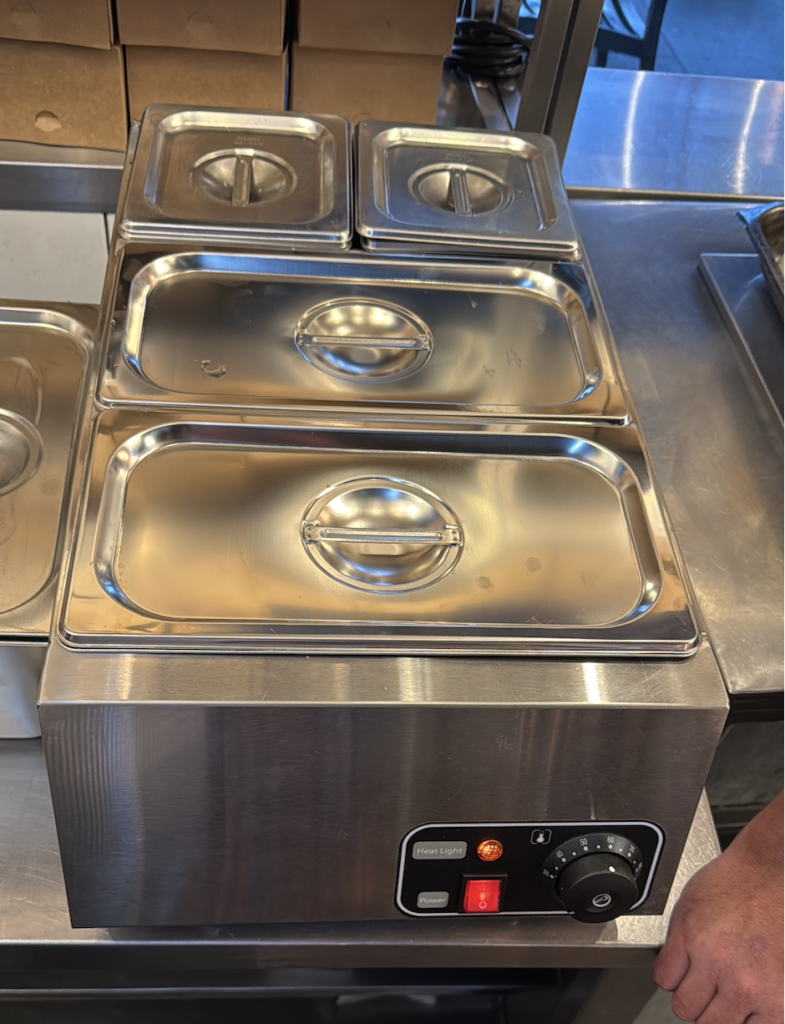
Enter the dry bain marie – a smarter, more direct approach. Instead of water, it uses a low-controlled temperature heating element directly beneath the pans, drawing just 250 watts (0.25 kW) for a standard sauce and gravy display. This provides up to 80% energy savings over wet models. For larger displays, a dry system employs a 3 kW element, cutting power use by at least 50% compared to the 6 kW wet versions. No water means less waste, easier cleaning, and consistent heat without the risk of steam burns or uneven spots. It’s a plug-and-play upgrade that maintains food safety while slashing operational costs.
To illustrate the difference, here’s a diagram of a traditional wet bain marie system, showing the water bath and heating element setup.
And here’s a diagram of a dry bain marie, highlighting the direct low-temperature element for efficient heating.
Crunching the Numbers: Real Savings and Quick Payback
Let’s break it down with some simple math, assuming a 12-hour daily operation and electricity at $0.15/kWh (adjust for your rates).
– Small Display (Sauces/Gravies):
– Wet: 3.6 kW × 12 hours = 43.2 kWh/day → $6.48/day.
– Dry: 0.25 kW × 12 hours = 3 kWh/day → $0.45/day.
– Daily Savings: $6.03 (about 93% reduction, aligning with up to 80% in variable use).
– Annual Savings: $2,201 (365 days).
– Large Display (Warm Foods):
– Wet: 6 kW × 12 hours = 72 kWh/day → $10.80/day.
– Dry: 3 kW × 12 hours = 36 kWh/day → $5.40/day.
– Daily Savings: $5.40 (50% reduction).
– Annual Savings: $1,971.
The initial investment for retrofitting or replacing units typically pays back in just two years, thanks to these savings – and that’s before factoring in reduced water usage, lower maintenance, and less food waste from better temperature control. In our chain, we’ve cut overall energy costs by 15-20% in hot sauce storage and hot buffets and self-serve areas alone.
Why Restaurants Should Make the Switch
Beyond the numbers, dry bain maries promote sustainability by minimizing water and energy waste, aligning with eco-conscious customers. They also enhance food quality – no dilution from steam means richer flavors in sauces and gravies. For chain owners like me, it’s about scalability: Easy to implement across locations with minimal downtime.
If you’re dealing with rising utility bills or inefficient displays, consider dry bain maries. They’ve been a game-changer for us. What’s your biggest efficiency challenge in the kitchen? Drop a comment below!