
Ensight developed the Energy Value Chain Optimisation (EVCO) approach to reveal once hidden energy waste in support of Orison Swett Marden quote:
“Opportunities? They are all around us… There is power lying latent everywhere waiting for the observant eye to discover it.”
EVCO provides a platform to observe your energy use differently, to reveal energy cost-saving opportunities that would normally not be identified with traditional energy auditing techniques. It reveals opportunities at the edges, at the transitions between operations and plants of large vertically integrated commercial and industrial businesses. Ensight has applied EVCO for several clients to reveal cost savings of 20% on a reliable basis, one industrial client this savings totalling $20 million per annum.
EVCO is an innovative approach to energy analysis that reveals the value of energy waste in multi-site operations to a business along the entire supply chain. Ensight developed the EVCO method to analyse a businesses’ energy use across a vertically integrated precious metals operation. Developing an overall EVCO model allows the energy analyst to create a company Sankey energy cost diagram mapped to the many processes in several operations.
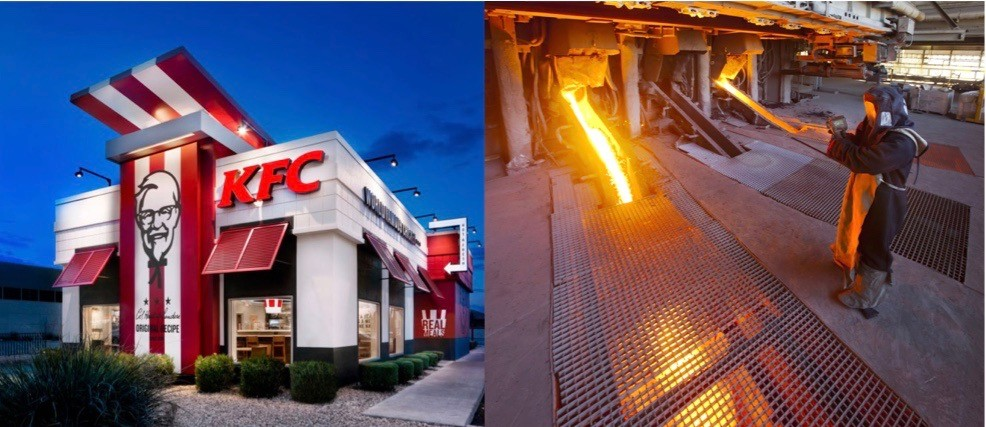
An example of the application of EVCO is a vertically integrated large industrial company. Such as company could have mines, concentrators, processing, smelting and refining operations. These operations have a number of plants to support their functioning. Plants such as HVAC chilling systems, compressed air systems, air separation units, freight logistics, acid plants, furnaces and dryers. Other types of operations could also include a school district (which includes logistics, administration, maintenance, catering, schools), or an airline, a hotel chain or a quick-service restaurants chain.
Each of the vertically integrated operations will have energy wasted at the edge points. Edge points are the transition of the input our final output to an operation. At these transitions, energy must be exchanged and loses often go unidentified. Sometimes it is the form that the energy is supplied in such as an oxygen supply or the contractual form like that of a dry or wet fuel logistics contract. These examples would normally not be accounted for in the books of the business. When EVCO is used, uses such as these are identified as energy-related. Whilst they are not normally accounted for in the P&L of a business, under a normal audit they wouldn’t be identified, and thus no energy-saving opportunities would be identified. EVCO reveals this usage and the opportunities for energy cost savings measures are identified for implementation.
EVCO involves several stages and elements including:
1. Siloed operations have a lot of unidentified energy waste, and thus unneeded energy cost expenditures occur. These occur at the input and output of each operation. A number of assessments are required to be made at the edge of each operation. The edge is a transition point between operations and sites and includes an assessment of inventory, stockpiles, energy costs, plant capacity factors, transport logistics, loading and unloading and queueing of trucks.
2. Create single line diagram and Sankey diagram of each operation. Showing the connectedness of each of the operation’s inputs and outputs including the edges of each operation.
3. Each part of the operations production value chain will be identified and mapped with monthly energy and production data and plotted on the single line diagram.
4. All the bottlenecks and constraints are identified in each operation and plotted on the single line diagram.
5. Key production statistics and energy cost elements are also identified and plotted on the single line diagram.
6. A real-time energy cost model will be developed to reveal the cost of energy waste, and also plotted on the single line diagram.
Outcome:
1. The total of all energy costs and cost leakage is fully revealed.
2. The key edge barriers to the efficient operation are revealed.
3. A plan to resolve the edge barriers is developed.
4. The creation of a scope of energy cost saving projects is developed to address the full value chain of the business.
5. The business case for an edge set of actions is developed.